
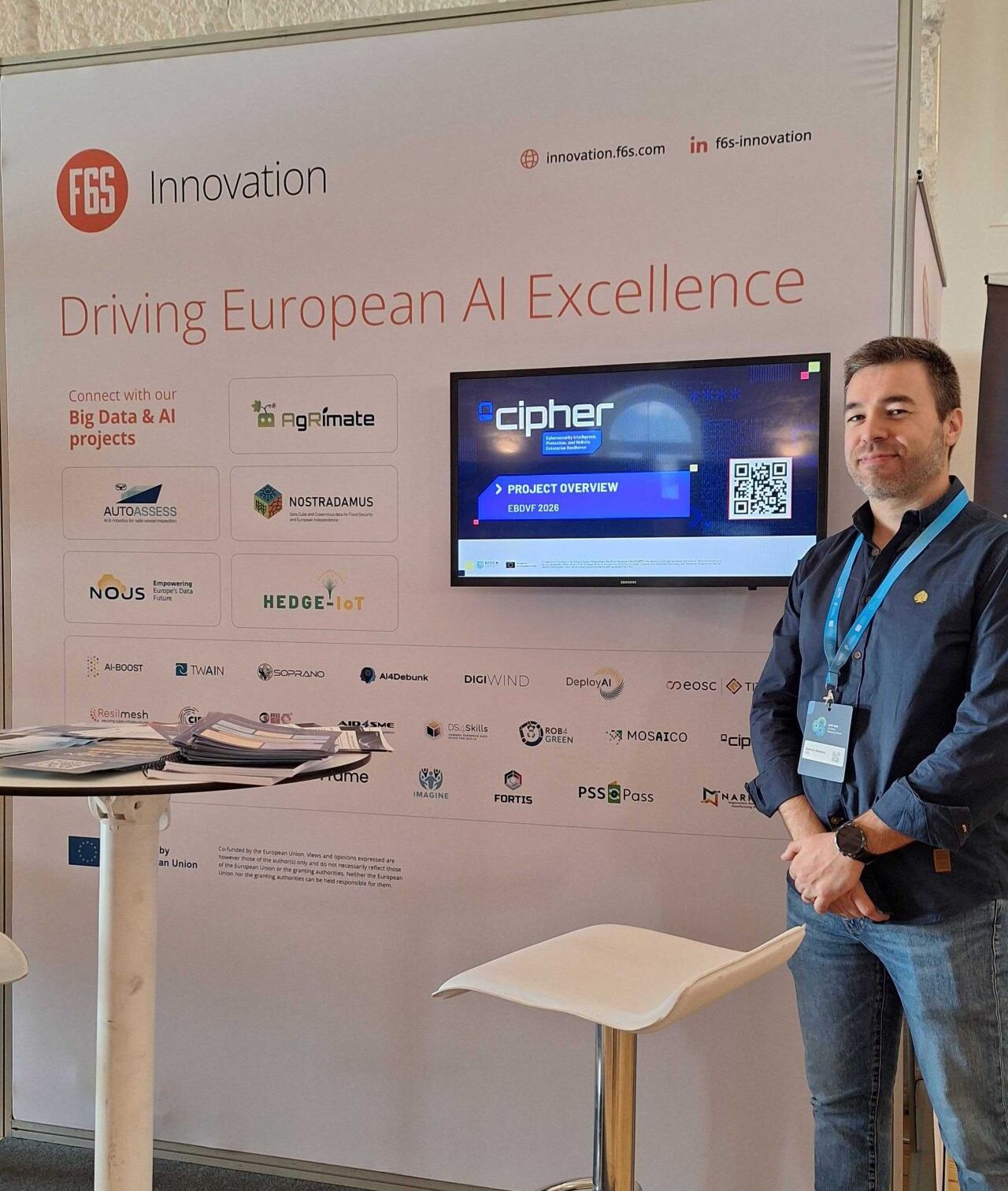
As Europe accelerates its transition toward an interconnected, data-driven economy, strategic autonomy and technological resilience have moved to the center of European industrial policy. That’s exactly why we participated to the AI Data Robotics Forum (ADRF 2026) in Porto, where key researchers, innovators, SMEs, and institutional decision-makers gathered to shape Europe’s technological landscape.
Represented on-site alongside our consortium partner F6S Innovation, our team took part in this flagship gathering to engage directly with the broader European digital ecosystem.
What is the AI Data Robotics Forum (ADRF)?
The AI Data Robotics Forum serves as the annual gathering driving Europe’s AI, Data, and Robotics strategy. Co-driven by European partnerships, such as the AI, Data and Robotics Association (ADRA), the forum focuses on:
-
Accelerating the industrial uptake of cutting-edge AI, data spaces, and robotic systems.
-
Uniting European stakeholders from cross-border research initiatives to industrial adopters.
-
Championing European digital sovereignty, safe technology adoption, and cross-sector competitiveness.
ADRF provides a collaborative ground where emerging technology projects, ranging from edge computing platforms to distributed data infrastructure, connect to build standard-aligned European solutions.
Why attending the ADRForum matters
While ADRF is primarily known for data management and robotics, modern critical infrastructures cannot deploy advanced AI and autonomous systems without verified cyber resilience. Being on the ground at ADRF delivered direct strategic advantages for our roadmap:
-
Highlighting security as an enabler for Next-Gen Tech: Data spaces and automated robotics introduce broad, interconnected attack surfaces across the cloud-to-edge continuum. Our presence underscored that compliance (such as NIS2 and GDPR) and pre-emptive cybersecurity validation must be integrated directly into emerging data ecosystems rather than added as an afterthought.
-
Connecting with the Open Call Community & European Innovators: With €4.32 million in Financial Support to Third Parties (FSTP) dedicated to funding SMEs, start-ups, and innovators across two Open Calls, engaging directly with researchers and tech founders was vital. This provided an early launchpad to build interest and engage future applicants who will deploy, test, and validate novel tools within our framework.
-
Strengthening synergies across European initiatives:
Exhibiting alongside complementary initiatives (DeployAI, OptimAIse, Resilmesh, and DS4Skills) allowed us to identify concrete cross-project synergies. Aligning standardised interfaces and cross-domain requirements ensures our validation frameworks serve operational realities across multiple sectors.
-
Advancing cross-border collaboration: Meeting technical and operational leaders in Porto enriched our validation scenarios with practical feedback from operators facing cross-border and supply chain cybersecurity challenges.
What’s next?
Our conversations in Porto confirmed the strong appetite for accessible, standardised cybersecurity testing facilities across Europe’s critical industrial sectors.
Stay tuned as we prepare further details on our technical roadmap, upcoming workshops, and the official opening of our cascade funding opportunities!